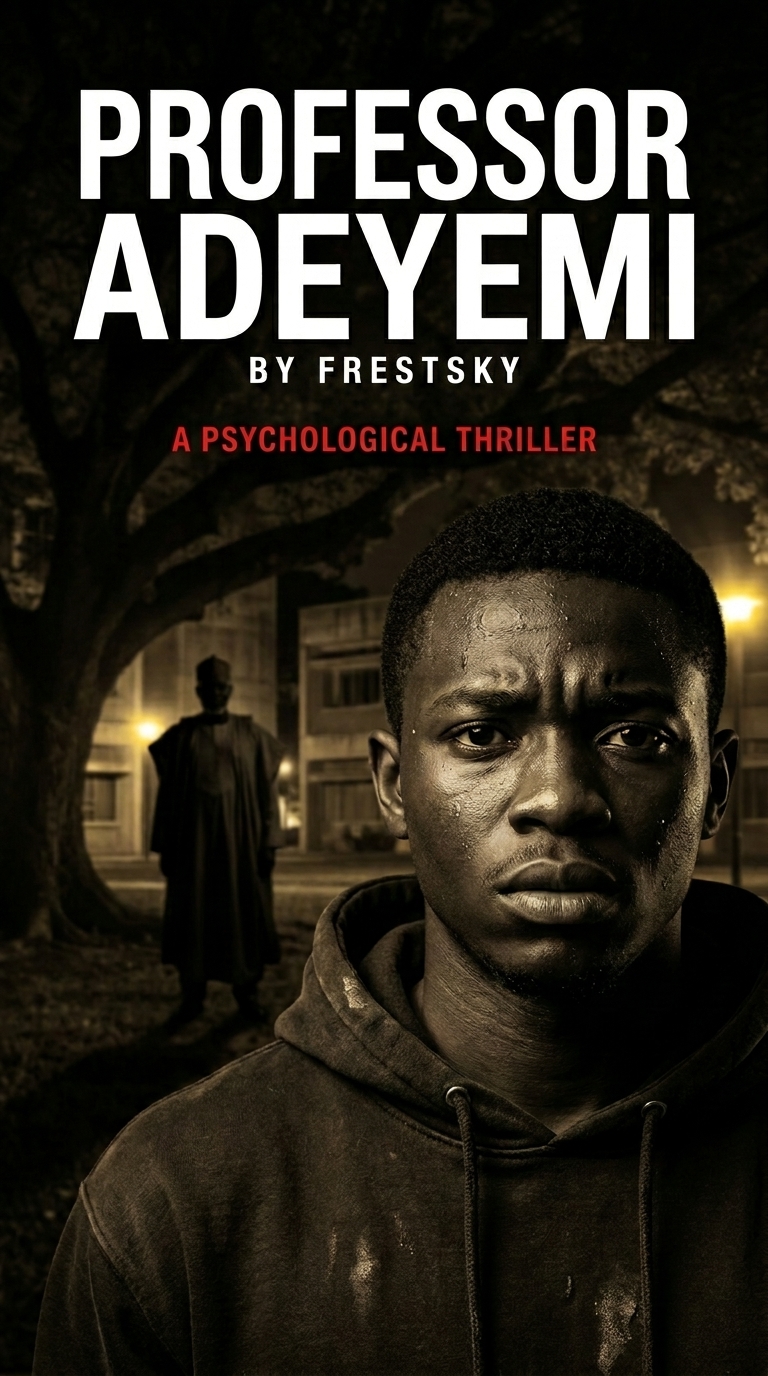

I was nineteen years old when I got my admission letter; by then, the first semester just started. My mom screamed so loudly when she heard the news. It was a full, open-throated scream that brought our neighbour, Mrs Okafor, to the fence to ask if something had happened. Something had happened. Her son, the one she had been waking at four-thirty every morning throughout secondary school to study, the one she had been feeding extra protein because she read somewhere that it helped the brain, that son had gotten into university.
I remember standing in the parlour watching her dance and thinking, quietly, that this was exactly how it was supposed to go. It was not arrogance. I was just so certain I deserved it. I had worked for this with a discipline that left very little room for doubt.
My mathematics teacher, Mr. Fashola, had written in my testimonial that I possessed one of the sharpest analytical minds he had encountered in twenty years of teaching. I had read that sentence more times than I would admit to anyone.
So yes. I arrived at that university certain of myself. Certain of what I was capable of.
The campus was bigger than I expected.
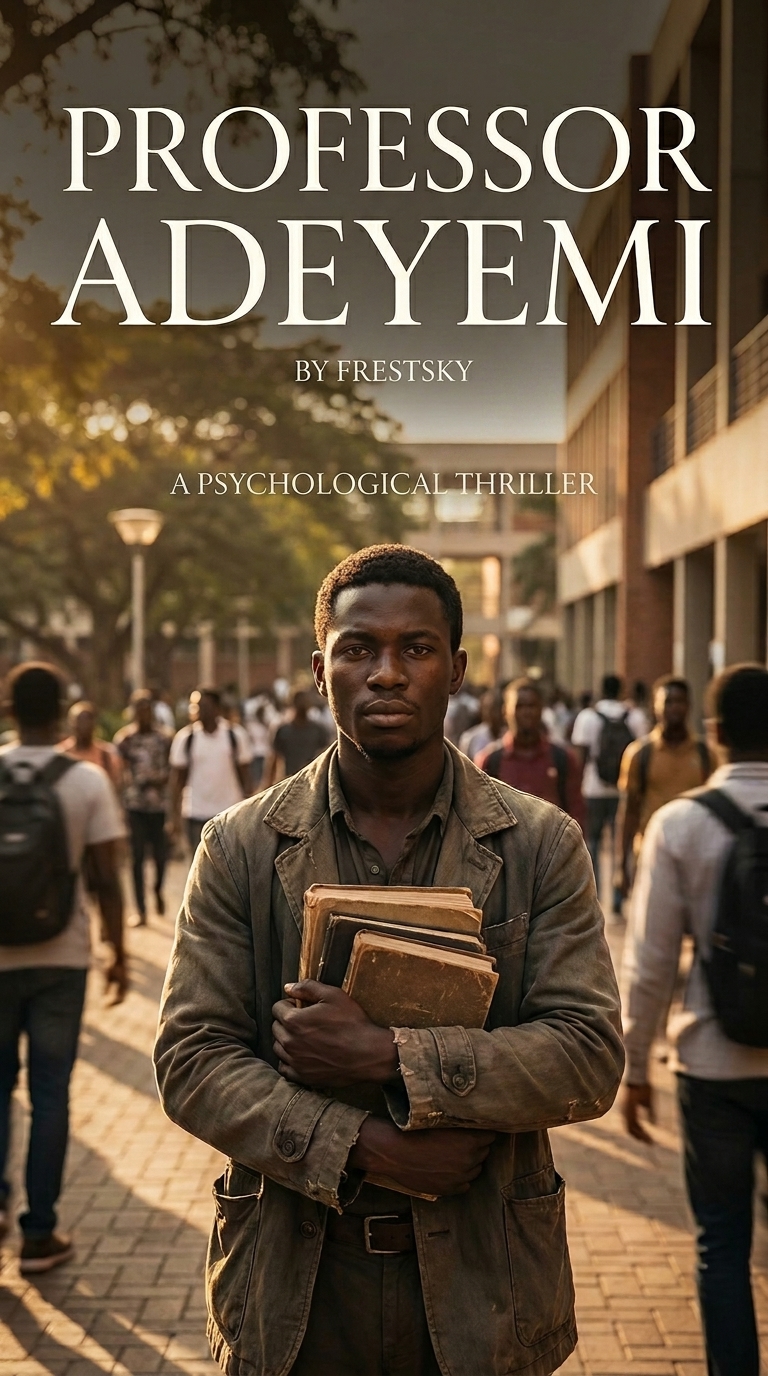
I had visited once before, during the post-UTME screening, but that day I had been too nervous to really see the place. Now I saw it. The long boulevard of trees leading from the gate, the old faculty buildings with their red rooftops and peeling paint, the newer structures they had built in the last decade sitting beside them like children trying to look serious. Students moved everywhere in clusters, in pairs, alone, with the particular energy of people who had somewhere to be and the particular confidence of people who had already figured out where that was.
I had not yet figured out where that was. But I was going to.
My roommate that first year was a boy named Kunle who arrived with three large Ghana-must-go bags and a small generator he had somehow convinced the hostel authorities to allow. He was from Ibadan, he talked constantly, and within the first forty-eight hours he had introduced himself to everyone on our floor and learned something personal about each of them. I watched him do this with a kind of quiet admiration I did not express. I was not built that way. My friendships formed more slowly, more carefully, the way you build something you intend to last.
It was through Kunle, though, that I met Emeka.
Emeka was down the hall, Room 14, and he appeared in our doorway on the third night holding a plate of jollof rice he had somehow acquired and looking for people to eat with. He was tall, unhurried in his movements, with the kind of face that people instinctively trusted. He sat on Kunle’s bed, finished his rice, and then stayed for another three hours talking about everything; football, ASUU strikes, the particular madness of Nigerian universities, his family in Enugu, what he wanted to do with his life. I mostly listened. By the time he left I knew I was going to know this person for a long time.
I was right about that, at least.
Those first weeks were good. I want to be honest about that, they were genuinely good.
There is something about the beginning of university that is difficult to describe to someone who has not experienced it. The freedom of it. Nobody tracking your movement, nobody enforcing your bedtime, nobody standing over your shoulder asking if you had covered today’s topic or submitted your notes. You were responsible for yourself, completely, for the first time in your life. For someone like me, who had spent years operating under strict self-imposed structure, this felt less like freedom and more like the right conditions. Like finally having the correct environment for what I already was.
My course was Computer Science. I had chosen it deliberately, it suited the way my mind worked, the way I naturally moved toward problems and wanted to dismantle them into smaller, solvable pieces. My first semester courses were difficult but not unmanageable. I attended every lecture. I took careful notes. I formed a small study group with Emeka and two others from my department, a quiet girl named Ada and a boy named Seun who laughed at everything but studied harder than anyone I had ever met.
I was doing well.
More than well. I was doing what I had always done, working steadily, thinking clearly, moving in the right direction.
And then the first semester results came out.
I was with Emeka to check our results from our portals using his laptop. Emeka’s results loaded first. He looked at the screen, nodded slowly, and said nothing. I would learn later that he had passed everything. That nod was just Emeka, he processed things quietly and moved on.
My portal took another few minutes. The cursor kept spinning. The music blasting from the jam box in the opposite room drilling into the side of my head and I was telling myself to be patient, it was just results, I had prepared, there was no reason… The page is loaded.
I looked at it for a long time.
Failed! Two courses. Not low scores, failed!!.
Below the pass mark in two courses I had attended every lecture for, taken every note for, read every recommended material for. Suddenly I stopped hearing the blaring sound. My heart even stopped beating for a few seconds.
“Tayo.” Emeka’s voice, low, beside me.
I closed the portal. I walked out into the afternoon heat and stood on the side of the road outside the hostel and stared at nothing in particular while the okadas and keke napeps moved past me in both directions and the sun pressed down on my head with an indifference that felt, in that moment, personal.
I had never failed at anything in my life.
Not a test. Not an assignment. Not a class quiz in the morning. I was sick and had prepared nothing. I was the boy with five distinctions. I was the boy Mr. Fashola had written about in twenty years of teaching. And I had come to university and failed two courses in my first semester as though I was someone else entirely. As though the person I had been all my life had been left behind somewhere between home and this campus, and what arrived here was a lesser version I did not recognise.
I did not tell my mother. I told myself it was because I did not want to worry her. That was partly true. The fuller truth was that I did not yet have words for what I was feeling, and the feeling was too large and too unfamiliar to hand to another person before I had even finished holding it myself. I went back to the hostel. I sat on my bed. Kunle was out somewhere. The room was quiet. I sat there for a very long time.
The second semester did not go better. It went differently, I worked harder, slept less, pushed past exhaustion into the particular dead-eyed focus of someone running on sheer refusal to fail again. I passed everything that semester. But barely. Scores that would have embarrassed me in secondary school now felt like victories, and that bothered me more than anything. The standards I was measuring myself against had shifted without my permission.
Something was wrong with me in this place. I could not identify what it was. I had examined it from every angle my analytical mind could find, my study methods, my time management, the quality of my notes, whether I was eating correctly, whether the noise of the hostel was affecting my concentration. I had adjusted everything there was to adjust.
Nothing changed.
I was still not the person I had been.
By the time the second semester ended, I went home for the long holiday. My mother noticed I had lost weight. She asked if I was eating. I told her the food was fine. She looked at me for a moment longer than the answer required, then went back to her cooking.
I sat in the parlour of the house where I had studied every morning at four-thirty, where she had screamed with joy over my admission letter, and I tried to remember with any precision who exactly that boy had been. It was harder than it should have been.
I returned for my second year quieter than I had left, more careful. More guarded about what I expected from myself, which is another way of saying I had begun, without fully realising it, to be afraid.
It was in the second week of first semester, my second year, that I met Professor Adeyemi.