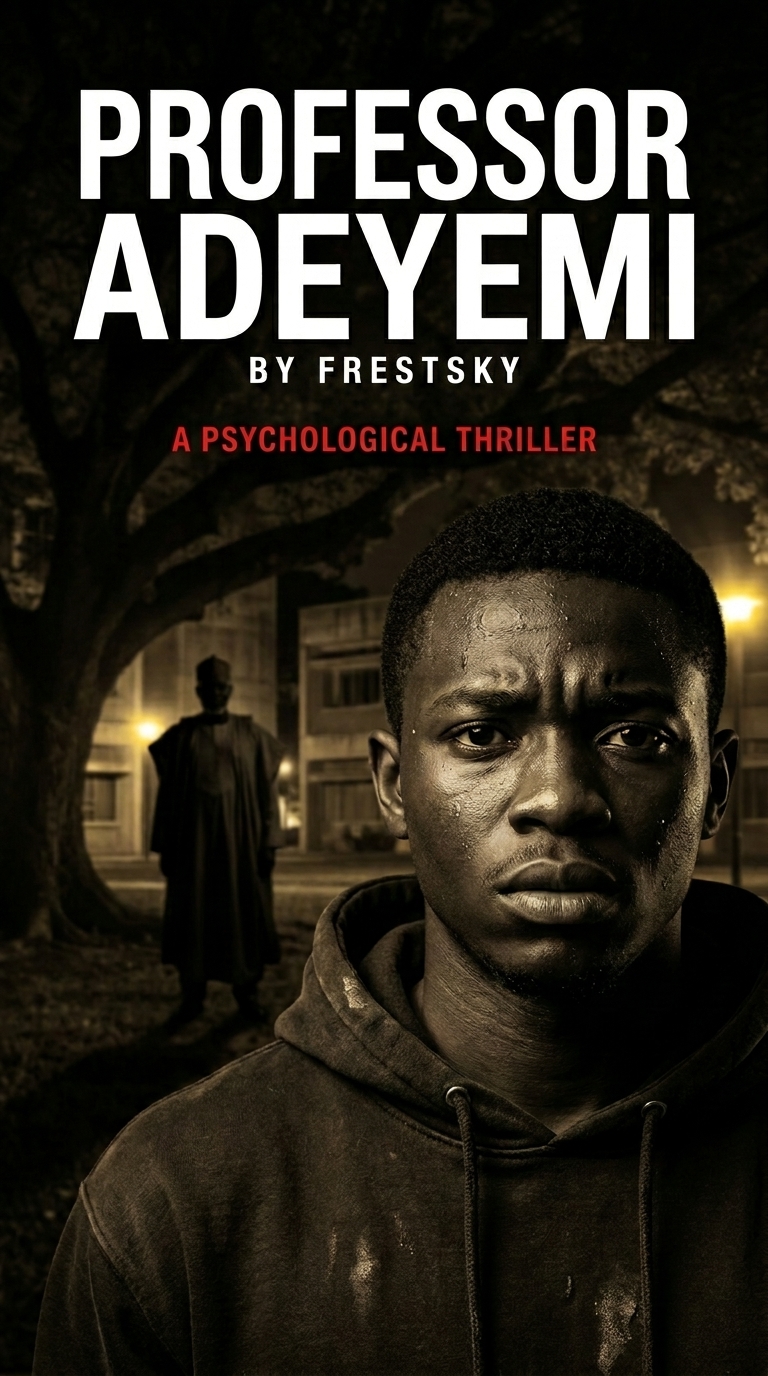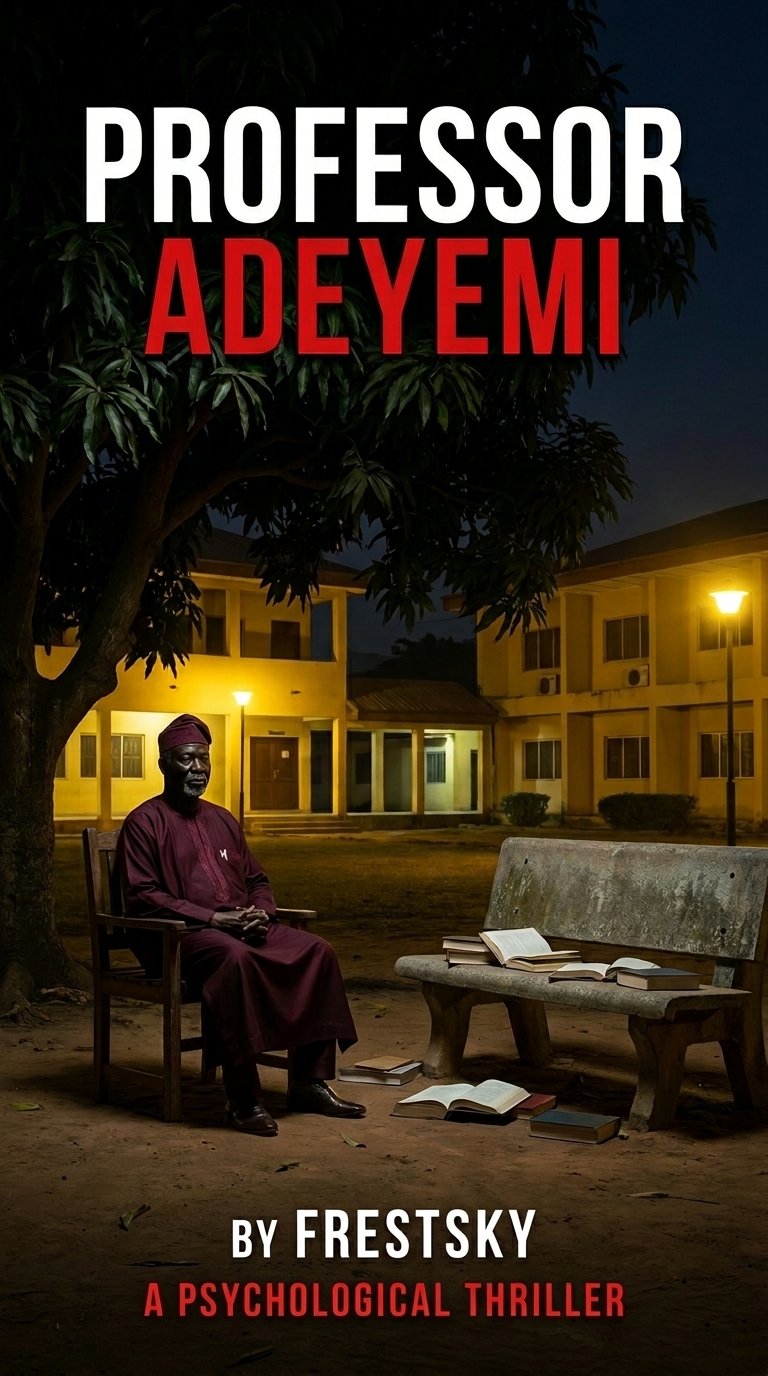

It started with a photograph. Not the one from the archive, I will get to that. It started with a smaller photograph, the kind that does not seem important until later, when you are looking back and trying to find the exact moment the ground began to shift beneath you.
It was a Friday afternoon in my third semester, midway through second year. I had gone to the faculty of social sciences to return a book I had borrowed from a colleague in the philosophy department, a text on epistemology that Professor Adeyemi had recommended and that turned out to be more useful to my thinking than anything on my actual course outline. The faculty building was older than most of the campus. It really surprised me to see such because until that time, I had never been there or would never have been if not for the professor.
When I got to their library, while searching for the book, I came across an old hand book from 20 years before and I became curious. I opened it and saw a gallery of photographs, both of lectures, deans, H.O.Ds, etc. The images were obviously in black and white.
The accumulated faces of people made me scan through very quickly. Then …
I found his face before I was consciously looking for it. It stopped me. It was a black and white photograph, smaller than some of the others, in a thin dark frame. The face in it was Professor Adeyemi’s, the same serious set of features, the same stillness in the eyes.
At first I was surprised that he looked like he hadn’t aged a bit since then. But wasn’t he supposed to be younger? I was confused, but it was unmistakably him. I would have known that face anywhere. I had been sitting across from it almost every day for more than a year.
Beneath the photograph was a small printed label.
Prof. O. Adeyemi. Philosophy Department.
Then I read the dates on the label. I read them twice.
I took out my phone and photographed the frame. Then I walked out of the humanities building into the afternoon sun, and I stood on the steps, and I told myself there was an explanation. A relative, perhaps. A son who had gone into the same field and bore a strong resemblance to his father. The photograph was old, the dates on the label could have been a typographical error, a clerical mistake, the kind of small administrative failure that Nigerian institutions produced as a matter of routine.
I went home. I did not go to the quadrangle that evening. I told myself I was tired.
For the next three days I did not go to the quadrangle at all. I tried to study in the room, or in the library, and I did not examine too carefully why I was avoiding the place I had been going every evening for over a year or why understanding had suddenly become a struggle.
Kunle noticed I was quieter than usual and asked if I was alright. I told him I was fine, that I had a lot of work. He accepted this because it was the kind of thing that was always plausible about me.
Emeka noticed too, but Emeka did not ask. He had the quality and ability of being able to tell when a question would not be welcome and waiting instead. I was grateful for it, and also aware, in a way I did not explore, that his patience with me had taken on a particular quality since the evening he had waved at me in the quadrangle.
On the fourth day I went to the library. Not to study. I went to the archive section, the part of the library that smelled the most of the time, where the older records were kept in binders and folders that had not fully made the transition to digital. I spoke to the archive librarian, an older man named Mr. Eze who wore reading glasses on a chain around his neck and moved with the deliberate precision of someone who knew exactly where everything was and resented any implication to the contrary.
I told him I was researching former faculty members for a departmental project. I gave him the name. He did not look it up immediately. He looked at me first, over the top of his glasses, with an expression I did not understand at the time.
Then he went to the files. He came back with a folder. Inside was a faculty profile, the same photograph from the handbook, printed larger here, clearer. Name. Department. Academic history. Publications. And at the bottom of the page, two lines that I read and then sat very still with for a long time.
Retired: 1998. Deceased: March 2000.
Below that, in smaller text: Cause of death: undetermined. Matter referred to the university committee. File closed 2001.
I closed the folder.
Mr. Eze was watching me.
“Are you alright, son?” he said.
“Yes sir,” I said. “Thank you.”
I slid the folder back across the desk. I stood up. I walked out of the archive section, through the library, out through the main doors, across the courtyard, and I sat down on the first bench I came to and I put my head in my hands.
What followed was the longest internal argument of my life. I am a logical person. I want to be clear about that, not because logic is always right, but because it is what I am built on, the framework through which I have always moved through the world. When something does not make sense, my first instinct is not to accept the impossible. It is to find what I have missed.
So I sat on that bench, and I found what I had missed. Or rather, I tried.
The photograph, a relative. A coincidence of features. It happened. The name, common enough. Adeyemi was not an unusual name. There could be two, one living, one dead, both connected to the philosophy department in different eras. The registrar who had found no record, understaffed, disorganised, looking in the wrong place.
Each explanation was individually reasonable. I assembled them into a structure I could stand on, and I stood on it, and I went back to the hostel, and I opened my laptop, and I tried to read.
I could not read.
I went to the cyber cafe to print out the image, I still don’t know why.
That night I dreamt more than I usually allowed myself to remember.
I was in a room, low ceiling, concrete floor, and the smell of something I could not identify. There were other people in the room with me, though I could not see their faces clearly. We were watching something, or waiting for something, and there was a feeling in the room of a dare that had gone too far but that nobody was willing to be the first to take back.
There was a boy. I could not see his face in the dream. I never could. But I knew him, in the way you know things in dreams, with a certainty that bypasses the need for evidence. I knew who he was, and I knew what was about to happen, and I could not move.
I woke at two thirty-seven. I know the exact time because I looked at my phone immediately. I tried to settle my breathing for a few minutes.
The following evening, I went back to the quadrangle. I needed to confront my fears, at least one of them. The one that was physical. Physical? That word suddenly sounded strange in my head.
He was there. Of course he was there, standing by the mango tree, hands behind his back, completely still in the way that had stopped seeming unusual to me many months ago and now, suddenly, seemed like the most unusual thing in the world.
I sat on the bench. I watched him for a moment before he turned, because I wanted to observe him when he did not know he was being observed. He stood the way he always stood. He breathed, or appeared to breathe, the agbada moving slightly at the chest. The security light fell on him.
The security light fell on him, and I noticed, for the first time, or perhaps for the hundredth time without having been ready to see it , that it fell on him wrong. Not dramatically wrong. Not the absence-of-shadow wrongness of a ghost story. A subtler thing.
The angle of the light and the depth of the shadow at his feet did not correspond the way they should. As though the light was passing through some agreement with his presence rather than meeting it directly.
I rubbed my knuckles.
He turned.
“You were not here yesterday,” he said.
“I had work,” I said.
He looked at me in the way that had always meant he could see past what I was saying to what I was not saying, and said nothing.
We had a session. He asked his questions. I answered them. The tutorial was good, it was always good, that had not changed, and part of me hated how much that complicated everything. When it was over and he stood to leave, I said:
“Professor. How long have you been at this university?”
He paused.
“A long time,” he said.
“Do you have an office here in school? Somewhere I could reach you outside of here?”
He looked at me. “Here is where I am,” he said. “You know where to find me.” He left.
I sat on the bench for a long time after. The mango tree moved in the wind. The security light buzzed. Somewhere across the campus a group of students were laughing about something, the sound carrying clearly in the evening air.
I took out my phone and looked at the photograph and took out the printed copy and kept looking at ghe both of them.
Then I opened the browser and searched his name. The results were sparse. An old departmental newsletter. A conference paper from 2009. And one small entry in a university memorial page, the kind maintained by academic departments for faculty who had passed.
In memory of Professor Oluwaseun Adeyemi, 1945–2000. A dedicated scholar and beloved teacher whose contributions to the Department of Philosophy remain…
I stopped reading. I sat there in that quadrangle, in the bench I had made mine, under the same security light I had read under for over a year, with the memorial page open on my phone, and for the first time I allowed myself to sit inside the thing I had been building explanations against.
Something was wrong. Something was deeply, fundamentally wrong, and I had known it for a long time, and I had chosen, every single time the knowledge surfaced, to file it away and go back to sleep. I was not going to be able to do that anymore.
That night the dream was different.
It was the same room, the same concrete floor, the same low ceiling. The same group of us, watching, waiting. But this time the boy turned around. I saw his face. I woke up in shock and sat straight up in bed and I was shaking, and Kunle shifted on the other side of the curtain and murmured something in his sleep, and I sat there in the dark with my knees pulled to my chest and my hand pressed flat over my mouth. I had not thought about Rotimi in three years. I had not let myself.